Showing posts with label Amazing World. Show all posts

May 18, 2013

I ♥ Elephants - 1

Love this animated picture from the brilliant series of photographs from the 25th annual National Geographic Traveler Photo Contest, collected at the In Focus site run by The Atlantic.

The contest is under way, and entries will be accepted for another six weeks, until June 30, 2013. First prize winner will receive a 10-day Galapagos expedition for two.


 A group of 12-14 hyenas were chasing a herd of 7-8 elephants. The elephant herd included 2 adult females, a few teenagers, and a baby that was a few days old (belonging to one of the adult females). The hyenas were trying to get at the baby. In this picture, the mother is kicking at the hyenas. (© Jayesh Mehta/National Geographic Traveler Photo Contest

Amazon’s ‘invisible flying rivers’

See the video at this link via BBC:

The trees in the Amazon suck up water from the ground and pump out billion of tonnes of water vapour a day into vast “flying rivers”. In this film Dr Miguel Pinedo-Vasquez, from Columbia University and Cirfor (Center for International Forestry Research), lead scientist with The Nature Conservancy Dr M Sanjayan, ecological economist Dr Trista Patterson and environmental economist Pavan Sukhdev, reveal how this water is carried across Latin America where it falls as rain and nourishes the agricultural economies of these countries.
(Picture Source)

May 1, 2013

A sack resembling a human scrotum that can shift through the entire color spectrum!

Long read for the day:

Octopus: The Footed Void, at the New York Review of Books.

The closer you look at an octopus, the more you see. 

Consider its anatomy: the “head,” a sack resembling a human scrotum that can shift through the entire color spectrum; the three hearts pumping blood that contains copper rather than iron; the eyes so very like human ones and yet radically more elegant in design. In a celebrated poem Ogden Nash begs the octopus to tell him if its limbs are arms or legs. Textbooks have a no-nonsense answer: they are arms, not legs (and emphatically not tentacles). But super tongues would be at least as good. Each octopus arm is a muscular hydrostat, like a human tongue, and each of the tens or hundreds of suckers on it is lined with tens of thousands of chemoreceptors—taste buds to you and me—and a comparable number of nerve endings that provide an exquisite sense of touch.
Or consider its intelligence.

More at the article.

Related viewing: This video from some years back.


August 11, 2010

The Feeling of Awe

I have been reading and enjoying Merwin's poetry lately and started reading some of his prose pieces (The Book of Fables) last night but could not really get into it much. 


So, instead I looked up some critical articles and interviews with Merwin on JSTOR. Reading an interview from 1988, I found this paragraph which I thought was worth transcribing and saving because it really echoes the way I usually feel about human endeavors and ventures on earth!
I don't see that our culture and our species are behaving in a more enlightened and gentle and harmonious fashion now than we were twenty years ago. And the cause of the anger is, I suppose, the feeling of destruction, watching the destruction of things that I care passionately about. If we're so stupid that we choose to destroy each other and ourselves, that's bad enough; but if we destroy the whole life on the planet! And I'm not talking about a big bang; I'm talking about something that is happening as we are sitting here talking about it - the destruction of the seas, the destruction of species after species, the destruction of the forests. These are not replaceable. We can't suddenly decide years down the line that we made a mistake and put it all back. The feeling of awe - something that we seem to be losing - is essential for survival.

April 23, 2009

The cosmos is all it is, or ever was, or ever will be."

friend emailed me about this news snippet today about a story from... once upon a time!
 
Its the tale of a primordial blob 12.9 billion light years away! Stunning stuff, no?


So, how many of you have seen much of Sagan's Cosmos? I do not think I saw the show much in India; though I vaguely remember they showed it on Sunday's in the late 80s. From all I have read and heard, it is quite the show and a must-see. (Though an apples-to-orange comparison, it ranks right up there with David Attenborough's show Living Planet, which they also showed in India in the 80s, in terms of wonderful TV shows to watch in teenage years...and then again every few years till you die! I believe, modern cinematography has far surpassed the Living Planet experience recently with the Planet Earth series in 2006. The same friend recommends you watch the UK version, narrated by David Attenborough, if possible instead of the US cable television edition narrated by actress Sigourney Weaver).


Btw, it seems you can watch Carl Sagan’s Cosmos on hulu.com now.
The groundbreaking, and for many of us, life changing documentary “Cosmos” is now available on Hulu. The 13 episode series premiered in 1980 and it is estimated that it has been viewed by over a billion people. If you have never seen it or just want a refresher, head over to Hulu today

For those of you who cannot view videos on hulu, it also seems to be on Google Video also.  Start here - The Cosmos Part 1 The Shores of the cosmic ocean - and then go find the other 12 episodes via a search or under Related Videos.

Also this..


In 1996,  Sagan recorded a partial audio version of his 1994 book "Pale Blue Dot". Often described as the "sequel" to Cosmos,...

Or you can read the book via google-books or if you want to buy a 7-DVD set and have $100 to spare, buy it on amazon! ;)

For now...go just hear the intro to Cosmos. Awesome introduction to this awesome universe!


The words:

"The cosmos is all it is, or ever was, or ever will be."

seem so appropriate for today as we read the above news from "once upon a time". :)

April 8, 2009

Beauty is in the eye of the beholder

Found a neat little compilation of the World's Most Beautiful Frogs

American Green Tree Frog (Hyla cinerea) Image Source 

And this one, from another compilation at the same site, is ...well..to quote Willy Wonka "You're Weird" :))

Hairy Frog (Trichobatrachus robustus) Image Source 

Actually, Scienceray is a good site with some great pic-posts to share with kids! 

For eg: 

March 25, 2009

The hybrids are here

No.. not hybrid cars. Hybrid animals! :)
A froppotamus; a frogodile; a cat-cow (does it go meow-moo?) (All photographs are © BNPS.co.uk).

Note that these are just flights of fancy - thanks to Photoshop - and were entries to an online competition.

But these "new" animals are for real: a striped gecko and three frogs - including one with a loud ringing call.
Scientists have discovered dozens of new species of animals and plants in a remote 'Lost World' in the dense forests of Papua New Guinea, an island north of Australia. Among them are 50 new types of spider, a striped gecko and three frogs - including one with a loud ringing call. The unique creatures, which have never been documented before, were found by a team of scientists with Conservation International, who made the discoveries during a four-week expedition to the country's unexplored Kaijende highlands and Hewa wilderness 
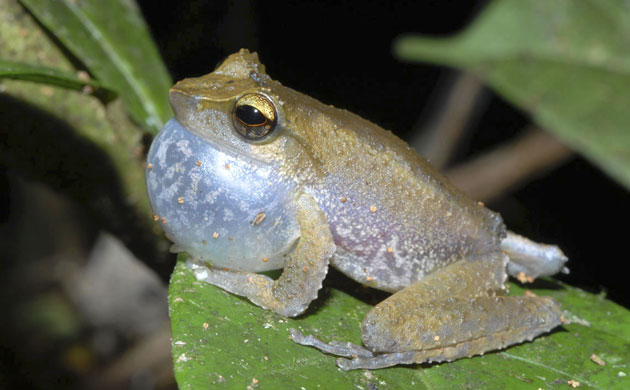
New Species Discovered: A frog : The Kaijende highlands and Hewa wilderness Papua New Guinea
   Litoria frog © Steve Richards/CI/Reuters

September 17, 2008

Mankind: You are insignificant

Amazing picture!


More amazing pictures from National Geographic can be downloaded here. Also some amazing pictures in NG's Visions of Earth series for October.

August 5, 2008

Dian Fossey must be smiling

Yay!!! A second chance for gorillas?
Gorilla experts with the Wildlife Conservation Society say they've made a spectacular find in isolated forests of the Republic of Congo: a large group of previously undiscovered western lowland gorillas. Researchers say the first wildlife census of the area has revealed that 125,000 western lowland gorillas are now thriving in the country's northern forests, a number that is twice some estimates for the worldwide population.
Relax not...they are still threatened by the war in Congo and are a critically endangered species. (If interested, read a few illustrative reports from the last one year alone: 1, 2, 3, 4, 5, ...)

Also read this report from Newsweek this March about how "endangered animals are the new blood diamonds as militias and warlords use poaching to fund death."

In addition, there is the dismal report today about the finds of an extensive new survey of primates worldwide which found that "48 percent of recognized primate species are endanged or vulnerable. The figure rises to 71 percent in Asia." And the knowledge that "lowly bugs, spiders and mollusks are more critical to ecology than larger more glamorous mammals;" not that we should not worry about threatened polar bears, whose very existence is threatened by global warming.

Speaking of global warming, I should direct you to the June 9, 2008 issue of Newsweek, which had an interesting cover story, explaining the politics of listing animals as endangered species:
Enlisting endangered species in the fight against global warming is either a brilliant tactical maneuver—or an arrogant abuse of the law.
--
"We consider species to be like a brick in the foundation of a building. You can probably lose one or two or a dozen bricks and still have a standing house. But by the time you've lost 20 per cent of species, you're going to destabilize the entire structure. That's the way ecosystems work." - Donald Falk, Christian Science Monitor, 26 May 1989

August 1, 2008

Total Solar Eclipse

Video of today's "Olympics eclipse" - a total solar eclipse from remote Xinjiang Uygur Autonomous Region in northwestern China near the Mongolian border. 10,000 people traveled for 16+ hours by bus to go see this!

Unfortunately, it is a 1 hour video from the San Francisco Exploratorium. If u do not have time, scroll ahead in the video to where 27 minutes are left and watch for the next 10-12 minutes at least. AMAZING! If interested, you can also read their dispatches.

Highlights of the video, where I found the link to the SFE video, are at this Wired blog post, which is posted by someone who saw their "first total solar eclipse in 2001 in Zambia, Africa and has never been the same since."

It's an amazing world, indeed!

P.S. If you are interesting in seeing the next one live, start planning. Another Wired blog post has a
"handy How-To guide to eclipse chasing. The next two are slated for July 22, 2009 and July 11, 2010. The first will be visible in parts of India and China before heading into the Pacific, while the second will primarily be visible from South Pacific islands. For a full list of future dates, check out NASA's page of eclipse dates."
This 2nd wired post also has a link to some amazing flickr albums, which link to not only some great eclipse pictures but also have some great pictures of NW China.

Also more links to eclipse images from around the world via the Huffington Post.

June 5, 2008

Door to hell

Check this out!!


A burning crater near Darvaza, Turkmenistan, is called The Door to Hell by the locals. Decades ago, geologists were drilling for gas when they hit an underground cavern filled with gas. The drilling rig and camp collapsed into the cave and ignited the gas, which has been burning ever since!
Check out a few other videos of this amazing place.
Flaming Crater, Darvaza Turkmenistan 1/6
Flaming Crater, Darvaza Turkmenistan 2/6
Flaming Crater, Darvaza Turkmenistan 3/6
Flaming Crater, Darvaza Turkmenistan 4/6
Flaming Crater, Darvaza Turkmenistan 5/6
Flaming Crater, Darvaza Turkmenistan 6/6

Wikipedia gives a few more tidbits about the raging fire -- its been raging since 1971!
In 1971 during a drilling, geologists accidentally found an underground cavern filled with natural gas. The ground on which the drilling rig was placed collapsed, leaving a large gaping hole exposed with a diameter of about 50-100 meters. To avoid poisonous gases coming out of the hole, it was decided to let the gases burn. As of 2008, gases in the underground cavern are still burning without interruption.
Some more incredible pictures here. Apparently, Turkmenistan has the world's fourth-largest reserves of natural gas.

July 4, 2007

the amazing lyrebird

To celebrate the eightieth birthday of one of television's most iconic presenters, UKTV launched My Favourite Attenborough Moment, in tribute to Sir David Attenborough.

See the video of the amazing lyrebird... - chosen in the UK as the no. 1 David Attenborough’s moment. 24% selected the little known lyrebird whilst the mountain gorillas received 17% of the vote, closely followed (15%) by fantastic footage of the rarely seen blue whale.

June 14, 2007

A blue-blooded lobster

Never heard of a blue lobster

Researchers at the University of Connecticut found that the blue coloring occurs when lobsters produce an excessive amount of protein because of a genetic mutation. But if blue lobsters are cooked like their red brethren, they too turn red.

Update: No big deal says this man from Canada, who surgeons found had green blood! There is a limerick somewhere in here about the man from Vancouver.. but I can't write limericks!

September 13, 2006

Amazing Accidental Abundances - 1

The phrase "Amazing Accidental Abundances" is from "The more angles we choose to view it from, the more its amazing accidenal abundance imposes itself." - John Ashbery, in Introduction to The Best American Poetry, 1988. The above sentence was written with poetry in mind but it could be true for anything..and even life itself!

Anyways, here is a compilation of various fascinating things from around the world..
  1. See this.. Fascinating! A starkly beautiful overhead image of shadows cast by a caravan of camels trekking across desert sands is the work of photographer George Steinmetz
  2. Frozen Cherry Trees -(via)

August 31, 2006

Body Worlds

Andrea Shea, WBUR’s new arts reporter, has just reviewed the touring exhibition “Body Worlds 2,” that opened at Boston’s Museum of Science this past Sunday. - via

Not one more refugee death, by Emmy Pérez

And just like that, my #NPM2018 celebrations end with  a poem  today by Emmy Pérez. Not one more refugee death by Emmy Pérez A r...