April 9, 2018

Second Attempt Crossing, by Javier Zamora

A poem today by Javier Zamora, whose poems about immigration, refugees, and exiles hit a nerve like few others!

This poem is from the Nov 2016 issue of Poetry magazine. You can also listen to a podcast where the magazine's editors discuss the poem.


Second Attempt Crossing

by Javier Zamora


For Chino
In the middle of that desert that didn’t look like sand
and sand only,
in the middle of those acacias, whiptails, and coyotes, someone yelled
“¡La Migra!” and everyone ran.
In that dried creek where 40 of us slept, we turned to each other
and you flew from my side in the dirt.

Black-throated sparrows and dawn
hitting the tops of mesquites,
beautifully. Against the herd of legs,

you sprinted back toward me,
I jumped on your shoulders,
and we ran from the white trucks. It was then the gun
ready to press its index.

I said, “freeze, Chino, ¡parĂ¡ por favor!”

So I wouldn’t touch their legs that kicked you,
you pushed me under your chest,
and I’ve never thanked you.

Beautiful Chino — 

the only name I know to call you by — 
farewell your tattooed chest:
the M, the S, the 13. Farewell
the phone number you gave me
when you went east to Virginia,
and I went west to San Francisco.

You called twice a month,
then your cousin said the gang you ran from
in San Salvador
found you in Alexandria. Farewell
your brown arms that shielded me then,
that shield me now, from La Migra.
___
About the poetJavier Zamora was born in the small El Salvadoran coastal fishing town of La Herradura and immigrated to the United States at the age of nine, joining his parents in California. He earned a BA at the University of California-Berkeley and an MFA at New York University and is a 2016-2018 Wallace Stegner Fellow at Stanford University. ...  In his poems, Zamora often engages history, borders, and memory. In a 2014 interview with Paula Beete for the National Endowment for the Arts Art Works Blog, Zamora stated, “[Poetry] matters because there's a history of all the poets who have risked their lives [to write]. I think in the United States we forget that writing and carrying that banner of ‘being a poet’ is tied into a long history of people that have literally risked [their lives] and died to write those words.”


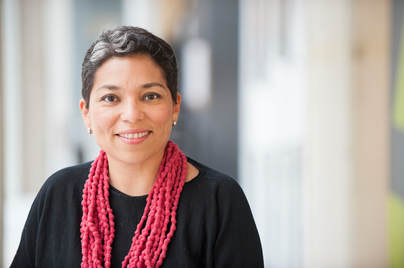
(Photograph by Monica Sok)

Zamora's honors include a National Endowment for the Arts fellowship, an Olive B. O’Connor Fellowship in Creative Writing at Colgate University, a CantoMundo fellowship, scholarships to the Bread Loaf Writers’ Conference and Napa Valley Writers’ Conference, a 2016 Barnes and Noble Writer for Writer’s Award, and a Meridian Editors’ Prize. He was also a recipient of a Ruth Lilly and Dorothy Sargent Rosenberg Poetry Fellowship from the Poetry Foundation and a Lannan Foundation fellowship. 


April 8, 2018

Despite My Efforts Even My Prayers Have Turned into Threats, by Kaveh Akbar


A poem for today by the Iranian-American poet Kaveh Akbar, from the Nov 2016 issue of Poetry magazine.

Despite My Efforts Even My Prayers Have Turned into Threats
by Kaveh Akbar

Holy father I can’t pretend
I’m not afraid to see you again
but I’ll say that when the time
comes I believe my courage
will expand like a sponge
cowboy in water. My earth-
father was far braver than me — 
coming to America he knew
no English save Rolling Stones
lyrics and how to say thanks
God. Will his goodness roll
over to my tab and if yes, how
soon? I’m sorry for neglecting
your myriad signs, which seem
obvious now as a hawk’s head
on an empty plate. I keep waking
up at the bottom of swimming
pools, the water reflecting
whatever I miss most: whiskey-
glass, pill bottles, my mother’s
oleander, which was sweet
and evergreen but toxic in all
its parts. I know it was silly
to keep what I kept from you;
you’ve always been so charmed
by my weaknesses. I just figured
you were becoming fed up with
all your making, like a virtuoso
trying not to smash apart her
flute onstage. Plus, my sins
were practically devotional:
two peaches stolen from
a bodega, which were so sweet
I savored even the bits I flossed
out my teeth. I know it’s
no excuse, but even thinking
about them now I’m drooling.
Consider the night I spent reading
another man’s lover the Dream
Songs in bed — we made it to
“a green living / drops
limply” before we were
tangled into each other, cat
still sleeping at our feet. Allow
me these treasures, Lord.
Time will break what doesn’t
bend — even time. Even you.

__
Kaveh Akbar
Kaveh Akbar.jpg
Kaveh Akbar
BornJanuary 15, 1989
Tehran, Iran
OccupationPoet, editor, professor
NationalityIranian-American
Notable worksCalling a Wolf a WolfPortrait of the Alcoholic
Notable awardsPushcart Prize
About the poet: Kaveh Akbar (born in Tehran, Iran) is an Iranian-American poet. Kaveh Akbar founded and edits Divedapper, where he interviews major voices in contemporary poetry. His poems have appeared in The New YorkerPoetryTin House, APR, PBS NewsHour, and elsewhere. He is the author of the chapbook Portrait of the Alcoholic (Sibling Rivalry Press, January 2017) and full-length collection Calling a Wolf a Wolf (Alice James Books, September 2017). Akbar has received a Pushcart and a Lucille Medwick Memorial Award from the Poetry Society of America. In 2016, Akbar was a recipient of the Ruth Lilly and Dorothy Sargent Rosenberg Poetry Fellowship from the Poetry Foundation. He was born in Tehran, Iran, and is currently a professor in the MFA program at Purdue University and in the low-residency program at Randolph College.

April 7, 2018

Rites to Allay the Dead, by Amit Majmudar

Today, a poem by Dr. Amit Majmudar - Rites to Allay the Dead, from the Jan 2005 issue of Poetry magazine.


Rites to Allay the Dead
by Amit Majmudar
         

It is never enough to close their door.
You have to calm the ripples where they last slept.
The sandals that remember where they stepped
Out of the world must be picked up off the floor,
"Their pictures not just folded to face the wood
But slid from the frames and snipped like credit cards.
Open the windows to air out the dark.
Closed blinds attract them, stopped clocks, cooling food.


They'll lick the doorstep like the cat come round,
Remembering you when they remember hunger.
They'll try to billow through their onetime sleeves
And point to your heart as in a lost and found.
The dead will know it, if you love much longer,
And whistle you near through the shuddering leaves.


___
About the poet: Amit Majmudar (b. 1979):
The son of immigrants, poet and novelist Amit Majmudar grew up in the Cleveland area. He earned a BS at the University of Akron and an MD at Northeast Ohio Medical University, completing his medical residency at the University Hospitals of Cleveland.

April 6, 2018

Self-Portrait in a Wire Jacket, by Monica Youn


Today, a poem by Monica Youn, an American poet and lawyer (with education at University of Oxford, Yale Law School, Princeton University!)

This poem via the Academy of American Poets website.

Self-Portrait in a Wire Jacket
by Monica Youn

To section off

is to intensify,

to deaden.

Some surfaces

cannot be salvaged.

Leave them

to lose function,

to persist only

as armature,

holding in place

those radiant

squares

of sensation—

the body a dichotomy

of flesh and

blood. Wait here

in the trellised

garden you

are becoming.

Soon you’ll know

that the strictures

have themselves

become superfluous,

but at that point

you’ll also know

that ungridded


you could no longer survive.

_____

Monica Youn headshotAbout the poet: Monica Youn is the author of three books of poetry, most recently BLACKACRE (Graywolf Press 2016), which won the William Carlos Williams Award of the Poetry Society of America. It was also a finalist for the National Book Critics Circle Award and the PEN Open Book Award and was longlisted for the National Book Award, as well as being named one of the best poetry collections of the year by the New York Times, the Washington Post and BuzzFeed. Her previous book IGNATZ (Four Way Books 2010) was a finalist for the National Book Award. Her poems have been widely published, including in PoetryThe New YorkerThe New Republic,Lana TurnerThe Paris Review, and The Best American Poetry. The daughter of Korean immigrants and a former lawyer, she was raised in Houston, Texas, and now lives in New York.

April 5, 2018

Look, by Solmaz Sharif

I first heard of Solmaz Sharif when she was nominated for the 2016 National Book Award for Poetry for her book, Look.
Solmaz Sharif’s astonishing first book, Look, asks us to see the ongoing costs of war as the unbearable loss of human lives and also the insidious abuses against our everyday speech. In this virtuosic array of poems, lists, shards, and sequences, Sharif assembles her family’s and her own fragmented narratives in the aftermath of warfare. Those repercussions echo into the present day, in the grief for those killed in America’s invasions of Afghanistan and Iraq, and in the discrimination endured at the checkpoints of daily encounter.
At the same time, these poems point to the ways violence is conducted against our language. Throughout this collection are words and phrases lifted from the Department of Defense Dictionary of Military and Associated Terms; in their seamless inclusion, Sharif exposes the devastating euphemisms deployed to sterilize the language, control its effects, and sway our collective resolve. But Sharif refuses to accept this terminology as given, and instead turns it back on its perpetrators. “Let it matter what we call a thing,” she writes. “Let me look at you.”

Instead of cutting and pasting a poem by her here, I'm going to embed a video of her reading a poem from Look here. Hear it and be moved!

Solmaz Sharif reads from Look, 2016 NBAs Finalists Reading:


____
About the poet: Solmaz Sharif is an Iranian-American poet.  Born in Istanbul to Iranian parents, Solmaz Sharif holds degrees from U.C. Berkeley, where she studied and taught with June Jordan's Poetry for the People, and New York University.  A former Stegner Fellow, she is currently a lecturer at Stanford University. Her first poetry collection, LOOK, published by Graywolf Press in 2016, was a finalist for the National Book Award. 
Solmaz Sharif 2110380.jpg
(via Wikipedia)


April 4, 2018

MarĂ­a Santos Sweetest Apple, by Claudia Castro Luna


For today, a poem by Claudia Castro Luna, from her newest book, Killing MarĂ­as, a collection honoring the disappeared women of JuĂ¡rez, Mexico. [1]

MarĂ­a Santos Sweetest Apple
by Claudia Castro Luna

They say we live
on either side of a border

I say that’s fodder
for a sexist imagination 

coyote’s tooth does not alone bite
and falcon’s feather takes not alone to the sky

silo living is not for living things

like the braid on my abuela’s back
and beads on a Rosary strand

interlinked we are rain, dust, stars


[1] About the book:

"Each poem in Killing MarĂ­as is addressed to someone named MarĂ­a who has been killed in Juárez. Lyric in tradition, they are more love poems than elegies. The poems are full of love, of care, of transnational empathy. This is a book that is unusually moving and beautifully written." — Juliana Sphar

"In this epic poetry collection Killing MarĂ­as, Claudia Castro Luna, both poetically and physically, settles spaces that were unclaimed by Latinas. Her inscription of the disappeared women of Juárez is a live cartographic image of struggle and spiritual survival. Castro Luna does not allow for these dead women to lack agency; they nourish us and the earth, and they speak with their bodies, literally, positioning themselves as recovered entities with agency, in the poet’s skilled narrativizing hands." — Gabriella GutiĂ©rrez y Muhs

"In Killing MarĂ­as, each poem is a rosary bead named after a woman’s life in Ciudad Juárez. Each bead reveals a crack of light through which we can peak into the hurt so many women experience from birth to death. Castro Luna’s piercing voice states “exploitation has no limits,” and that “man’s hypocrisy even less.” She dares us to stop being mediocre humans, especially men, and let the “feminine thrive.” — Javier Zamora
Picture
About the author:
Claudia Castro Luna served as Seattle’s first Civic Poet from 2015-2017 and is the author of This City (Floating Bridge Press).  She is a Hedgebrook and VONA alumna, the recipient of a King County 4Culture grant and a Jack Straw Fellow. Born in El Salvador she came to the United States in 1981. She has an MFA in poetry, an MA in Urban Planning and a K-12 teaching certificate. Her poems have appeared in Poetry Northwest, La Bloga, City Arts, Taos Journal of International Poetry and Art, among others. Her non-fiction work can be read in the anthologies, The Wandering Song: Central American Writing in the US, (Northwestern University Press); Vanishing Points: Contemporary Salvadoran Narrative, (Kalina Eds) and forthcoming in This Is The Place: Women Writing About Home (Seal Press). Living in English and Spanish, Claudia writes and teaches in Seattle where she gardens and keeps chickens with her husband and their three children.
She tweets here. Her blog here.

April 3, 2018

What happens when you are a bird and want to be a bee?, by Suvojit Banerjee


Today, a poem by Suvojit Banerjee, who I found via a post by him at the Rattle's Poets Respond Facebook group where he posted this (prose)-poem, also cross-posted at his blog here.  Poet's note about the poem: "... wrote this poem last week as a reaction to Trump's ban on transgenders serving in the military, though my poem touches on the reality of seclusion that they face from all parts of society."

What happens when you are a bird and want to be a bee?
by Suvojit Banerjee

Perched in a Bengal sun and a world full of binaries,

a spirit seeks validation in begging, yet there’s no Wikipedia
article about what she’s pleading for.

Retorting gazes that burn him with disgust are surprisingly united.

Some take the shape of his parents, some Youtube comments,
some are even his own image that still has makeup and
dried up blood.

A cinema-hall full of people laugh at iridescent jokes doled out

that hurt like a train, even more than when the officer-in-charge
asked her to strip down because there was a bulge
in her pants. Lying down in the training camp’s hard cot,
she remembers an equally deranged afternoon when
her dad had taught her that there were only
men and women in this world with the neatness of a
belt.

Five years ago, a man thought transforming into a woman

would finally make him whole, so he borrowed another man’s
writings from a hundred years back that told stories of a woman
who wanted to be a man. Later that year, the man was
surrounded by a thousand eyes as his body slowly entered the
crematorium. His soul, however, was burned an eon back.

When the news spreads, the Virginia sun is still busy painting the sky

with the color of an egg yolk; the familiarity of both is not lost to those
who read the stories of Greek heroes slaying mythical monsters. Only these monsters were danger close, even closer than the uncle who slid his hands
inside the guy’s pants because he wasn’t like other boys.

The incinerator slowly burned all the flesh, and people enjoyed it with a couple of beers;
For there were only ones and zeroes in this world, and one-ones and zero-zeroes
were thrown out of heaven.

__________________________________________
About the author:  Suvojit Banerjee has seen twenty eight summers, but he doesn’t remember all of them; his existence is torn between the suburbs in West Bengal he grew up in, and the city called Atlanta he now lives in. The world around him adorns many masks, and so does he, while roaming around its streets with the eyes as a journal and his soul as a pen. He is searching for answers in this surreal yet slimy maze, but the questions keep on changing every time.
His poems and prose have been previously published in Silver Birch Press, and also featured in places like eFiction India, Kind of a Hurricane Press, The Camel Saloon, The Word Couch, HackWriters, Voices de la Luna, Tuck Magazine, UUT Poetry and The Stray Branch Literary Magazine. His poems have also been featured in the book 'A Significant Anthology', which covers 175 writers from all over the globe. He observes, sometimes giving up consciousness in return. It is a dangerous thing, this silent stalking of nostalgia, but he has a maddening urge. He has to follow the trail.


Not one more refugee death, by Emmy Pérez

And just like that, my #NPM2018 celebrations end with  a poem  today by Emmy PĂ©rez. Not one more refugee death by Emmy PĂ©rez A r...